
 (510) 868-1614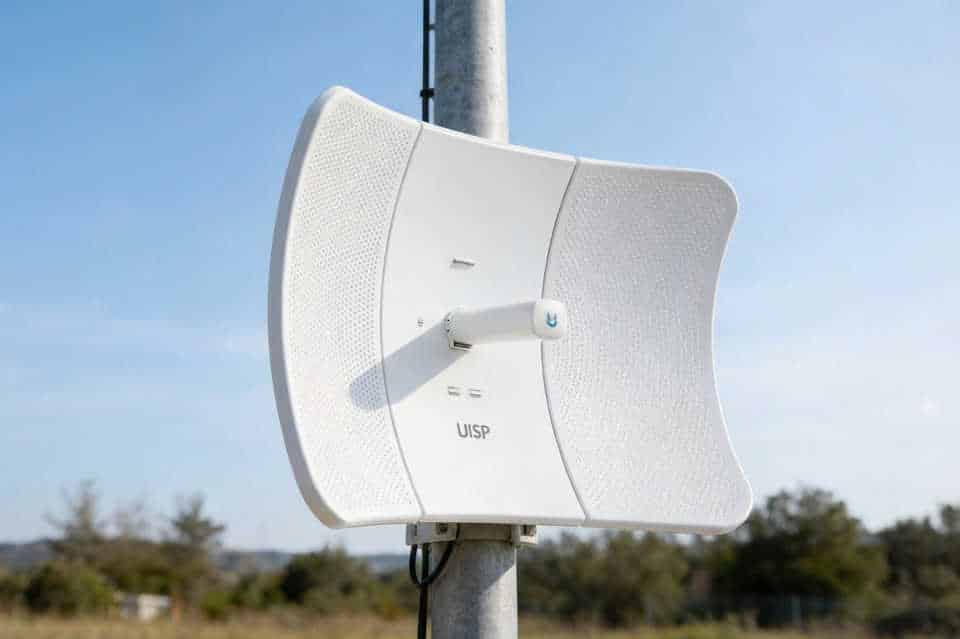
Imagine finding the perfect internet service provider (ISP). They offer local customer support, flat-rate pricing, and high-speed reliability. There’s just one massive roadblock: your Homeowners Association (HOA) or landlord tells you that you cannot use them.
They point to a strict policy in the bylaws: “No visible antennas, satellite dishes, or receivers allowed on the exterior of the property. Period.”It feels like a dead end. But federal law says otherwise.
If you are trying to cut ties with a giant cable monopoly and switch to a high-speed, local fixed-wireless internet provider, you need to know about a powerful federal shield: The FCC’s OTARD Rule. Here is how this federal regulation completely overrides your HOA’s restrictions and protects your right to choose your own internet provider.
What is the OTARD Rule?
The Over-the-Air Reception Devices (OTARD) rule is a federal regulation enacted by the Federal Communications Commission (FCC). Its purpose is simple: to stop local governments, landlords, and HOAs from blocking consumers from accessing modern, wireless communication services.
While originally designed in the 1990s for satellite TV dishes, the FCC has significantly updated the rule over the years to keep pace with modern technology. Today, the OTARD rule explicitly protects your right to install fixed-wireless internet receivers (the small, compact devices used by local ISPs to beam high-speed internet directly to your home).
The Three Rules Your HOA Cannot Break
Under federal law, your HOA or landlord is legally prohibited from enforcing any restriction that “impairs” your ability to install a wireless receiver. Specifically, an HOA rule is completely void if it does any of the following:
- It causes unreasonable delays: If your HOA requires you to submit an architectural review form, pay a fee, or wait months for a committee board meeting just to get approval to put up a small internet receiver, they are breaking federal law. The FCC states that requiring prior approval for an OTARD-protected device constitutes an “unreasonable delay.”
- It creates unreasonable costs: If your HOA says, “You can have the receiver, but you must build a $500 custom privacy screen around it,” that is illegal. Any rule that artificially inflates the cost of getting connected is prohibited.
- It degrades your signal quality: Your HOA cannot force you to place your internet receiver in a location where it cannot get a clear line of sight to the provider’s broadcast tower. If placing the device on the side of your house degrades your internet speeds, you have the right to place it where it works best.
Where Exactly Are You Allowed to Put It?
There is one important catch to the OTARD rule: it applies only to areas within your “exclusive use or control.”
Protected Areas (HOA Can’t Touch)
- Your private backyard or patio
- A balcony attached to your apartment or condo
- Exterior walls or roofs of a single-family home
Unprotected Areas (HOA Can Regulate)
- Common area roofs (e.g., condo building roofs)
- Exterior hallways or common walkways
- Shared light poles or community lawns
* As long as the receiver is smaller than one meter (about 39 inches) in diameter—which virtually all modern fixed-wireless receivers are—and it is installed in your private space, your HOA cannot force you to take it down.
How to Handle Your HOA: A Step-by-Step Guide
If you want to sign up for a better, local internet option but are worried about pushback from your property managers, use this playbook:
- Know Your Space: Confirm that the receiver can be mounted on your private property (like your roof, fascia board, or balcony railing).
- Order Your Service: Go ahead and schedule your installation. You do not need to ask your HOA for permission first.
- Keep the OTARD Rule in Your Back Pocket: If an HOA board member drops off a violation notice or an angry letter, don’t panic. Reply politely in writing, quote the FCC OTARD Rule (47 C.F.R. Section 1.4000), and point out that federal law explicitly preempts their local bylaws.
Federal law firmly establishes that your right to a reliable, high-speed internet connection is more important than your HOA’s aesthetic guidelines.
Don’t let rigid neighborhood bylaws trap you with a slow, overpriced cable monopoly. Take control of your home tech, exercise your federal rights, and choose the internet provider that actually treats you like a neighbor.
Contact Unwired Ltd Today!